
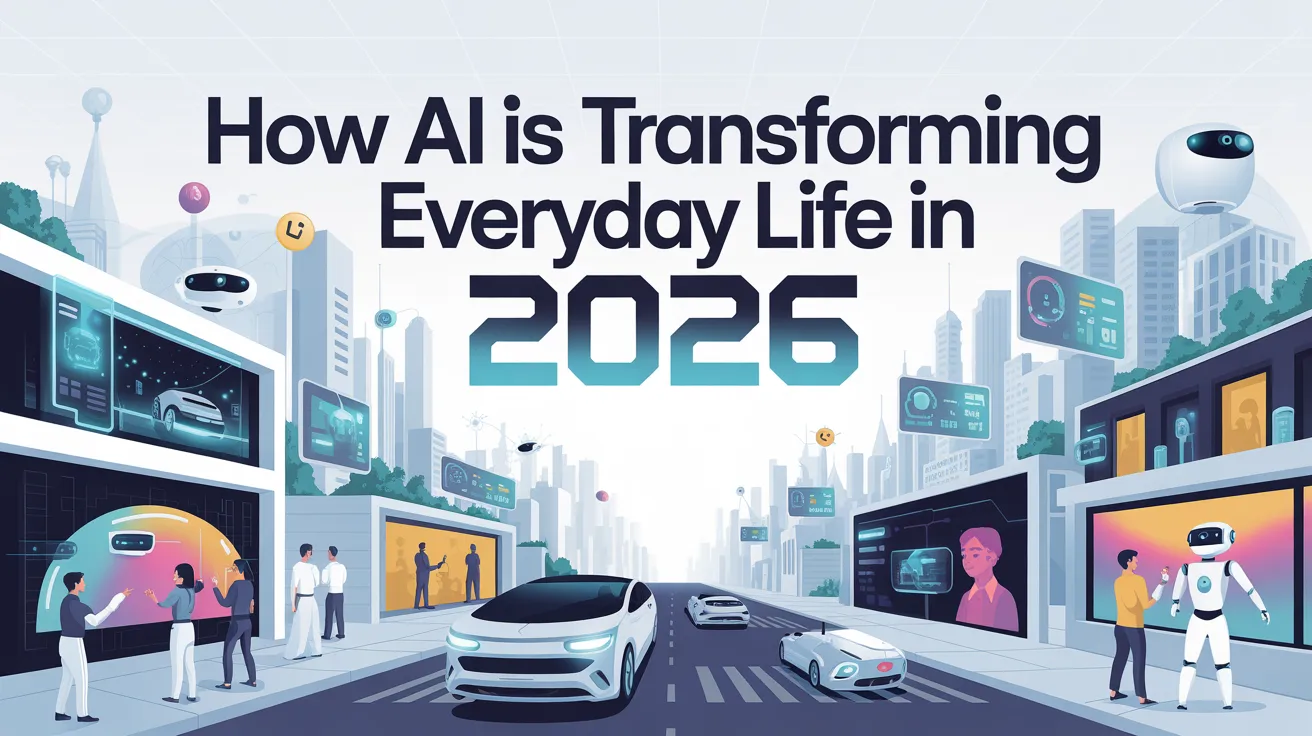
Artificial intelligence is no longer a futuristic concept. In 2026, AI has become an essential part of everyday life, influencing how people work, communicate, shop, learn, travel, and manage their daily routines. From smart assistants and personalized recommendations to healthcare innovations and automated workplaces, AI is reshaping modern society at an incredible pace.
As technology continues to evolve, understanding how AI is transforming everyday life can help individuals and businesses adapt to this rapidly changing digital world. In this blog post, we will explore the impact of AI in 2026 while following Google policies and high Rank Math SEO best practices.
The Growing Role of AI in Daily Life
AI technology is now integrated into many devices and services people use every day. Smartphones, smart homes, online platforms, and even vehicles rely on artificial intelligence to improve efficiency and user experience.
The growing accessibility of AI tools has made advanced technology available to millions of users worldwide. Tasks that once required significant time and effort can now be completed in seconds with the help of intelligent systems.
ALSO CHECK: Top Free Software Every PC User Should Have
AI in Smart Homes
Smart homes are becoming more common in 2026, and AI plays a major role in making them efficient and convenient.
AI-powered devices can:
- Control lighting and temperature automatically
- Improve home security with smart monitoring
- Manage appliances more efficiently
- Respond to voice commands
Virtual assistants have become smarter, understanding natural language and adapting to user preferences over time. This creates a more personalized and comfortable living experience.
AI in Healthcare
Healthcare is one of the industries most transformed by AI. In 2026, AI helps doctors, hospitals, and patients achieve better outcomes through faster and more accurate analysis.
AI applications in healthcare include:
- Early disease detection
- Personalized treatment recommendations
- Medical image analysis
- Virtual health assistants
Wearable devices also use AI to monitor heart rate, sleep patterns, and fitness activity, helping people maintain healthier lifestyles.
However, human oversight remains essential to ensure ethical and accurate medical decisions.
AI in Education
Education has changed significantly with the integration of artificial intelligence. Students now have access to personalized learning experiences that adapt to their strengths and weaknesses.
AI-powered educational tools can:
- Provide instant feedback
- Recommend learning resources
- Generate practice tests
- Support language learning
Online education platforms are also using AI to improve engagement and track student progress more effectively.
For teachers, AI reduces administrative tasks, allowing them to focus more on teaching and student interaction.
AI in Transportation
Transportation is becoming smarter and safer thanks to AI technologies. Navigation apps, autonomous driving systems, and traffic management tools are improving travel experiences in 2026.
AI helps by:
- Predicting traffic conditions
- Optimizing routes
- Enhancing vehicle safety features
- Supporting self-driving technologies
Public transportation systems are also using AI to improve scheduling and reduce delays.
These advancements save time, reduce fuel consumption, and improve road safety.
AI in Online Shopping
E-commerce platforms rely heavily on AI to personalize shopping experiences and improve customer satisfaction.
AI in online shopping can:
- Recommend products based on user behavior
- Provide virtual shopping assistants
- Improve fraud detection
- Optimize delivery systems
Personalized recommendations help users discover products faster, while businesses benefit from increased sales and customer loyalty.
AI in Entertainment and Media
Entertainment platforms are using AI to deliver personalized content recommendations. Streaming services, music apps, and gaming platforms analyze user preferences to suggest relevant content.
AI also helps creators by:
- Editing videos and audio
- Generating graphics and animations
- Automating subtitles and translations
This technology improves accessibility and allows creators to produce high-quality content more efficiently.
AI in Communication
Communication tools have evolved significantly due to AI advancements. Smart assistants, chatbots, and translation tools make communication faster and more accessible.
AI-powered applications can:
- Translate languages in real time
- Improve email writing
- Filter spam messages
- Provide automated customer support
These features are especially useful for businesses and remote teams operating globally.
AI in Workplaces and Business
Businesses in 2026 are using AI to automate repetitive tasks and improve decision-making.
Common workplace applications include:
- Data analysis and forecasting
- Customer service automation
- Workflow optimization
- Recruitment and HR management
AI increases productivity and allows employees to focus on creative and strategic work.
At the same time, workers are learning new digital skills to adapt to changing job requirements.
AI and Personal Productivity
AI-powered productivity tools help individuals manage their time and tasks more effectively.
These tools can:
- Organize schedules
- Set reminders
- Generate summaries
- Assist with writing and research
By reducing manual work, AI helps users stay productive and focused throughout the day.
Challenges and Ethical Concerns
While AI offers many benefits, it also raises important challenges and ethical questions.
Major concerns include:
- Data privacy and security
- Bias in AI systems
- Job displacement due to automation
- Dependence on technology
To address these issues, governments and companies are developing regulations and ethical guidelines for responsible AI use.
Transparency and human oversight remain essential for maintaining trust and fairness.
Google Policies and AI-Generated Content
As AI-generated content becomes more common, Google emphasizes the importance of helpful, accurate, and people-first content.
To align with Google policies:
- Focus on originality and quality
- Avoid spam or misleading information
- Ensure factual accuracy
- Prioritize user experience
AI should support content creation, not replace human expertise and creativity entirely.
SEO and AI in 2026
Artificial intelligence is also transforming search engine optimization. AI tools can analyze keywords, improve readability, and optimize content structure.
However, successful SEO still depends on:
- High-quality content
- User engagement
- Mobile optimization
- Website performance
Using tools like Rank Math SEO can help improve optimization while maintaining a natural and user-focused writing style.
The Future of AI in Everyday Life
AI will continue to evolve and become even more integrated into daily routines. Future advancements may include:
- More advanced virtual assistants
- Smarter healthcare systems
- Fully autonomous transportation
- Hyper-personalized digital experiences
As AI grows, balancing innovation with ethics and privacy will become increasingly important.
Benefits of AI for Society
When used responsibly, AI can improve quality of life in many ways:
- Increased efficiency and convenience
- Better healthcare and education
- Improved accessibility for people with disabilities
- Faster problem-solving and innovation
AI has the potential to create positive social and economic impacts worldwide.
Conclusion
Artificial intelligence is transforming everyday life in 2026 in ways that were once unimaginable. From smart homes and healthcare to education, transportation, and entertainment, AI is making daily tasks easier, faster, and more personalized.
While challenges such as privacy and ethical concerns remain, responsible use of AI can lead to significant benefits for individuals and society. Businesses, students, and everyday users who adapt to these technological changes will be better prepared for the future.
As AI continues to evolve, the most successful approach will combine advanced technology with human creativity, critical thinking, and ethical responsibility. The future of AI is not just about automation—it is about improving lives and creating smarter, more connected experiences for everyone.
1 thought on “How AI Is Transforming Everyday Life in 2026”