
Artificial Intelligence (AI) is no longer a futuristic concept reserved for tech giants. In today’s digital economy, AI has become a practical, accessible, and powerful tool that helps businesses of all sizes grow faster, operate more efficiently, and make smarter decisions. From startups and small businesses to large enterprises, AI is reshaping how companies attract customers, manage operations, and scale sustainably.
In this article, we explore how AI is helping businesses grow, the key areas where it delivers the most value, and why adopting AI is becoming essential for staying competitive.
Understanding AI in the Business Context
Artificial Intelligence refers to systems and software that can analyze data, learn from patterns, and make decisions with minimal human intervention. Common business applications include machine learning, natural language processing, computer vision, and predictive analytics.
According to McKinsey, businesses that adopt AI strategically are more likely to improve profitability and productivity compared to those that don’t.
Source: https://www.mckinsey.com/capabilities/quantumblack/our-insights
AI’s real power lies in its ability to process large volumes of data quickly, identify insights humans might miss, and automate repetitive tasks.
ALSO CHECK: Why 5G Technology Is Transforming Modern Connectivity
1. Improving Decision-Making with Data-Driven Insights
One of the biggest ways AI helps businesses grow is by enhancing decision-making.
How AI supports smarter decisions:
- Analyzes customer behavior patterns
- Identifies market trends in real time
- Predicts future demand and sales
- Reduces guesswork and human bias
AI-powered analytics tools help business leaders base their strategies on facts rather than assumptions. For example, predictive models can forecast sales trends, allowing companies to plan inventory, staffing, and marketing budgets more effectively.
2. Automating Repetitive Tasks and Reducing Costs
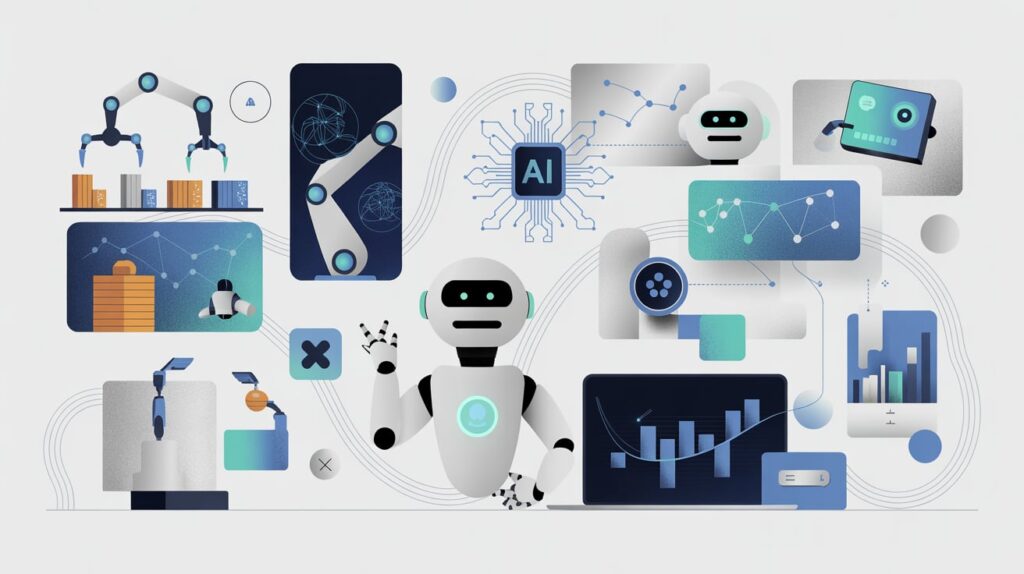
Automation is a major growth driver for businesses using AI.
Tasks commonly automated by AI:
- Data entry and processing
- Customer support via chatbots
- Invoice generation
- Email responses
- Appointment scheduling
By automating routine tasks, businesses save time, reduce errors, and lower operational costs. According to IBM, automation powered by AI can significantly improve operational efficiency.
Source: https://www.ibm.com/automation
This allows employees to focus on higher-value activities such as strategy, creativity, and customer relationships.
3. Enhancing Customer Experience and Satisfaction
Customer experience is critical to business growth, and AI plays a major role in improving it.
AI-powered customer experience tools include:
- Chatbots and virtual assistants
- Personalized product recommendations
- AI-driven customer support systems
- Sentiment analysis on reviews and feedback
For example, AI chatbots provide 24/7 customer support, ensuring faster response times and consistent service. Personalized experiences help increase customer satisfaction, retention, and lifetime value.
According to Salesforce, customers are more likely to stay loyal to brands that offer personalized interactions.
Source: https://www.salesforce.com/resources
4. Boosting Marketing and Sales Performance
AI has transformed digital marketing and sales strategies.
How AI helps marketing teams:
- Identifies high-converting audiences
- Optimizes ad targeting and budgets
- Generates content ideas and ad copy
- Tracks campaign performance in real time
AI tools can analyze customer data to determine which marketing messages work best and when to deliver them. This leads to higher conversion rates and better return on investment (ROI).
In sales, AI-powered CRM systems help predict leads most likely to convert, allowing sales teams to focus on the most valuable prospects.
5. Personalizing Products and Services
Personalization is no longer optional—it’s expected. AI enables businesses to tailor products, services, and content to individual users.
Examples of AI-driven personalization:
- E-commerce product recommendations
- Personalized email marketing
- Customized pricing strategies
- Content recommendations based on user behavior
By delivering relevant experiences, businesses increase engagement and build stronger relationships with customers. This personalization often leads to increased sales and brand loyalty.
6. Supporting Small Business Growth
AI is not just for large corporations. Small businesses are increasingly using affordable AI tools to compete with bigger players.
AI benefits for small businesses:
- Automated marketing and social media
- Affordable customer support solutions
- Better financial forecasting
- Simplified operations management
Cloud-based AI platforms make advanced technology accessible without large upfront investments. This levels the playing field and helps small businesses grow faster.
7. Improving Supply Chain and Inventory Management
AI helps businesses manage supply chains more efficiently by analyzing real-time data.
Key improvements include:
- Demand forecasting
- Inventory optimization
- Supplier performance analysis
- Reduced waste and shortages
By predicting demand accurately, businesses avoid overstocking or stockouts, which improves cash flow and customer satisfaction.
According to Gartner, AI-driven supply chain management improves resilience and efficiency.
Source: https://www.gartner.com
8. Enhancing Workforce Productivity
AI doesn’t replace employees—it supports them.
AI tools enhance productivity by:
- Providing real-time insights
- Assisting with research and analysis
- Automating administrative tasks
- Supporting remote and hybrid work
Employees using AI tools can complete tasks faster and with greater accuracy, leading to better performance and job satisfaction.
9. Strengthening Cybersecurity and Risk Management
As businesses grow, security risks also increase. AI helps detect and prevent threats more effectively.
AI in cybersecurity:
- Identifies unusual activity
- Detects fraud in real time
- Predicts potential security breaches
- Monitors systems continuously
This proactive approach helps businesses protect sensitive data and maintain customer trust.
10. Enabling Scalability and Long-Term Growth
One of AI’s greatest advantages is scalability. As a business grows, AI systems can adapt to increased data and demand without major restructuring.
AI supports scalability by:
- Handling higher workloads automatically
- Supporting global operations
- Adapting to changing market conditions
This makes AI a long-term investment rather than a short-term solution.
11. Encouraging Innovation and Competitive Advantage
AI enables businesses to experiment, innovate, and create new products and services.
Examples include:
- AI-powered apps
- Smart recommendations
- Predictive services
- Data-driven product development
Companies that embrace AI are more agile and better prepared for market changes.

12. Challenges Businesses Should Consider
Despite its benefits, AI adoption comes with challenges:
- Data quality and privacy concerns
- Employee training requirements
- Ethical considerations
- Initial setup costs
Businesses must implement AI responsibly and transparently to maximize benefits and maintain trust.
Final Thoughts
AI is helping businesses grow by improving efficiency, enhancing customer experiences, enabling smarter decisions, and unlocking new opportunities. In a competitive digital economy, AI is no longer optional—it is a strategic necessity.
Businesses that adopt AI thoughtfully and responsibly will gain a significant advantage, while those that delay risk falling behind. Whether you are a startup, small business, or enterprise, leveraging AI can help you grow smarter, faster, and more sustainably.
I don’t think the title of your article matches the content lol. Just kidding, mainly because I had some doubts after reading the article.
Thanks for sharing. I read many of your blog posts, cool, your blog is very good.
Your article helped me a lot, is there any more related content? Thanks!
Thanks for sharing. I read many of your blog posts, cool, your blog is very good.